





The faint echo of a song drifts over the mud walls of a village in West Midnapore. It’s a melody of childhood, sweet and distant, sung by a girl named Anjali, barely thirteen. She should be lost in the world of schoolbooks, dreaming of science lessons and stories. Instead, her fate, like that of countless others in rural Bengal, has been sealed. Next month, she will become a bride.
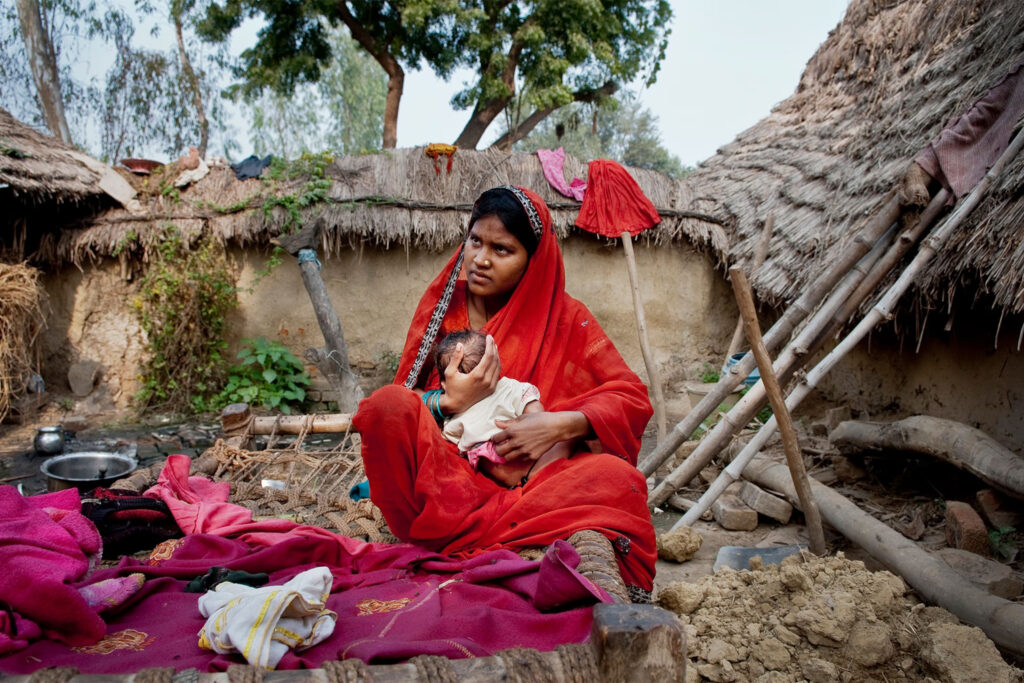
Next: an underage- pregnant , barely , a sixteen or seventeen years , with critical labour pain admitted ,better speak was rushed in a govt. Hospital in the same district and hospital staff did their best to save both the ‘mother’ and the new born after caeser in end of April . Same stories can be multiplied umpteen times centreing and under aged pregnant women undernourished or malnourished and underweight new born babies with governmental interventions failing miserably to contain such menace.
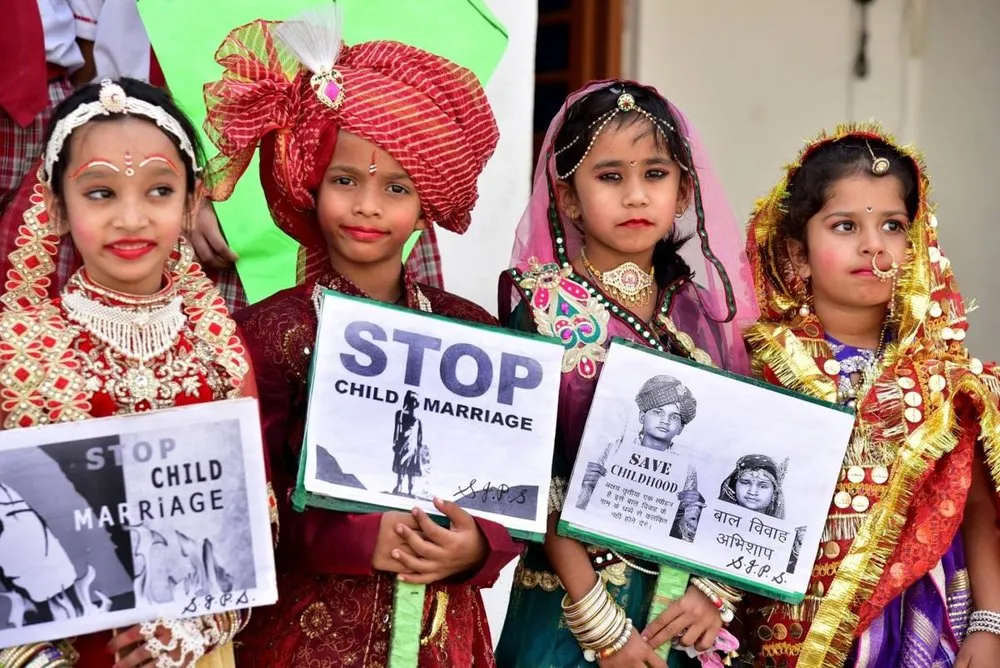
Across the fields and hamlets of West Bengal, the age-old evil of child marriages continues to thrive, stubbornly entrenched despite dedicated campaigns, legal frameworks, and community vigilance. This pervasive menace, lurking beneath layers of poverty, ignorance, and patriarchal norms, stubbornly refuses to abate, robbing young girls of their education, health, and fundamental rights.
The stark reality of this crisis is illuminated by recent data. In West Midnapore alone, over 11,500 child marriages were reported in the fiscal year 2022-23. Within this district, Keshpur block recorded a staggering 1,124 marriages of girls aged between 14 and 17, with some haunting cases involving girls even younger than 14. Other blocks like Daton 2, Debra, Ghatal, Narayangarh, and Shalbani paint a grimly similar picture: schoolbooks traded for bangles or sindoor, childhood dreams buried under the weight of domestic chores and premature pregnancies.
The devastating consequences are starkly visible in health statistics. In West Midnapore, out of 64,998 pregnant women admitted to government hospitals in 2023-24, a shocking 11,561 were underage. This included 1,130 girls below the age of 15, and 10,431 in the 15-19 age group. The trend continued into the following year; from April 2024 to February 2025, out of 57,401 pregnant women admitted, 9,139 were underage, with 8,936 falling within the 15-19 bracket.
The crisis extends beyond West Midnapore.
In Nadia district, 11,112 underage girls (aged 12-17) became pregnant in 2022-23. While this was a slight reduction from 14,784 in the preceding year, the district recorded 7,500 underage pregnancies in 2023-24, and over 8,000 across the entirety of 2024. This consistent prevalence underscores the severe health risks, including higher maternal mortality and morbidity, faced by these child mothers. Most of the ‘mothers’ after giving birth an underweight child turn anaemic and develop different maternity complications with no easy remedy.
Further south, in Burdwan district, the problem persists with alarming intensity. Health data from 2023-24 shows several blocks grappling with disproportionately high rates of underage marriages. Aushgram-I reported 20.61%, Bhatar 23.07%, Burdwan-I 22.76%, Katwa-II 23.82%, and Mangalkot 24.43%, all significantly exceeding the district average. This indicates that most of the 21 blocks in Burdwan are battling elevated rates of underage conceptions, a direct result of rampant child marriages.
These early marriages lead to significant school dropouts. Government figures for the 2023-24 academic year reveal that in blocks like Bhatar-I, Katwa, and Raina-I, 147, 143, and 199 female students dropped out, respectively. Across the district, approximately 1,100 girls discontinued their education, with 35.48% of them being underage—many destined for early pregnancies and unplanned motherhood. The Health Management Information System (HMIS) further corroborated this, reporting a 5% rise in underage motherhood, reaching 26.83% of total pregnancies. In 2023 alone, out of 29,991 pregnant women admitted to hospitals, 6,512 were underage, a figure that climbed to 6,822 (19.51%) out of 34,975 by October 20, 2023.
Child Marriage in Bengal: A Crisis Rooted in Decades, Deepening Across Districts
The deep-seated roots of this problem are evident even in older data. The 2011 Census painted a grim picture, revealing that 48% of married women in West Bengal had been underage at the time of their marriage. This historical trend continues to plague districts like Murshidabad. In 2012, Rukunpur Gram Panchayat in Hariharpara block saw an astonishing 91% of all marriages involve children (221 out of 243). The adjacent Khidirpore Gram Panchayat mirrored this with 91% (251 out of 281). Even in Beldanga, 58% (261 out of 408) were child marriages, and Begunbari reported 409 out of 864, or slightly below 50%. While NGOs and police have, on receiving prior intimation, managed to prevent 423 child marriages, countless others still occur quietly, hidden from official intervention.
More recently, a local vernacular daily reported a dire scenario in South Dinajpur, where approximately 7,000 child marriages were recorded, leading to 3,300 teenage pregnancies. The Harirampore block was particularly affected. These premature unions frequently lead to social problems such as divorce, domestic violence, and destitution, as young girls, ill-equipped for adult responsibilities, struggle to manage domestic and economic hardships.
From a national perspective, the National Family Health Survey-5 (NFHS-5) jointly conducted by the centre and UNICEF in 2019-21 revealed that 50.4% of married women aged 20-24 in West Bengal had been married before turning 18, a sharp rise from 42.9% in 2016. Furthermore, 21.9% of girls aged 15-19 had already become mothers. West Bengal, alongside Bihar and Tripura, continues to report over 40% of women aged 20-24 married before 18, significantly higher than the national average of 23.3%. The implications are chilling ; the numbers have likely risen further in the months and years since.
Why does this crisis persist despite progressive policy intentions? The answers lie in a complex interplay of socio-economic factors. Economic distress often forces families to see daughters as financial burdens, with marriage offering a perceived solution. Lack of education perpetuates cycles of ignorance, while deep-seated patriarchal norms, administrative gaps, and inadequate follow-up by enforcement agencies further exacerbate the problem.
Ending this generational cycle of deprivation requires more than just punitive action. It demands a holistic approach: strengthening law enforcement and ensuring prompt action on every reported case, sensitizing local panchayats and school authorities to become active agents of change, and fostering robust coordination among health workers, school teachers, and women’s self-help groups. Most critically, it calls for a profound cultural shift—a societal awakening that truly values every girl’s education, health, and dreams above archaic traditions. Only then can we ensure that the song Anjali sings is one of a future realized, not a childhood tragically lost.
But this is said easier than done. In Malda and Murshidabad , mostly minority oriented , Child marraiges are not just rampant , but it is innately ingrained in the psyche of community leaders who pampers this social sin in covert ways. ; school drop outs , labour migration and child marriages are different aspects of the same coin. Govt. Data can’t hide the crude reality of large scale school drop outs and their flight in different state capitals for hazardous , risky and painstaking construction works. It is no wonder to see that a boy hardly of class VII or VIII is seen working as tiles mistry in muffassil towns or state capitals for ‘higher wages’. In Kerala or Bengalooro for instance , a school left out of West Bengal can easily earn Rs. 700 to Rs.800 daily , while learning in school become agreat casualty. This child labourer fall easy prey to child marriage. In 2022-23 more than six lakhs students mostly HS. Examinee found vanishing from appearing in the HS Exams. Though the Govt. displays with great fanfare Banglar Uccha Siksha portal , but the horrible figures of school drop outs can’t be suppressed.