







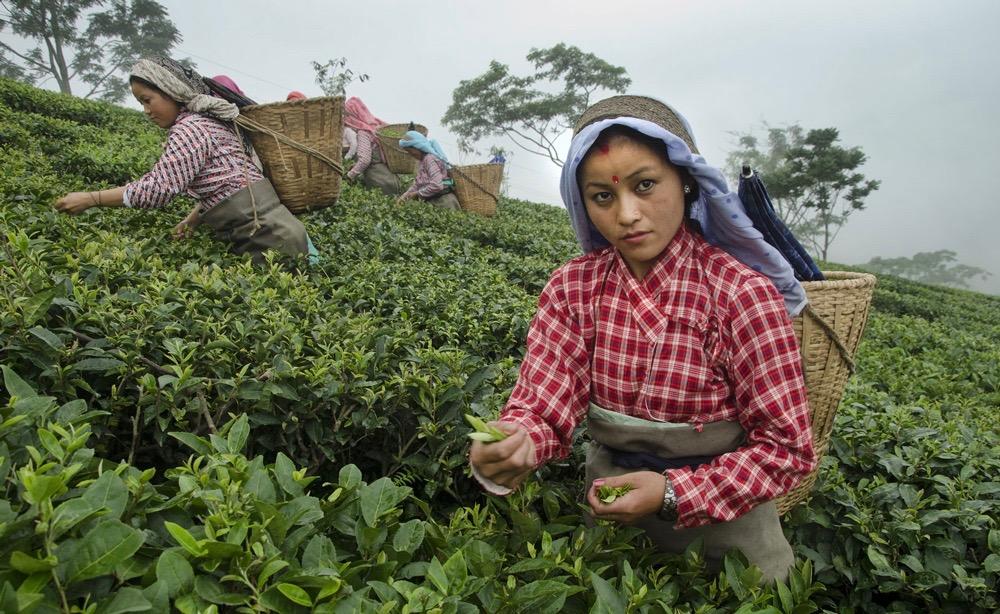
For more than a century, Darjeeling tea has stood as a symbol of refinement, heritage and extraordinary craftsmanship, earning praise across continents and cultures. In just one instance , during the 2018 FIFA World Cup in Russia, cafés, restaurants and shopping complexes proudly showcased Darjeeling tea as a luxury beverage. Tea connoisseur flocked to tea shops during those stimulating period of world cup in Russia. This was no surprise for a tea that has long charmed consumers from London’s Buckingham Palace to markets in Japan, South Korea, Germany, Hong Kong, the Czech Republic and the United States. Nearly forty-one million tea bags would reach Russia every year, and legends narrate how filmmaker Raj Kapoor himself introduced the drink during his visits, helping it gain visibility in the Soviet Union. The golden era that made Darjeeling the “Champagne of Teas,” complete with India’s first Geographical Indication (GI) tag, is part of a long and astonishing legacy.
That legacy, in fact, stretches back to the 1840s, when British officer Captain Samler planted the first saplings in the Darjeeling hills. By 1915, official records show 156 flourishing tea estates. Today, only 87 estates are authorized and survived somehow to sell their produce as true “Darjeeling” tea under the GI certification. Although Darjeeling produces less than 8.5 million kg—barely 0.2% of India’s total tea output—it is traditionally considered the finest tea in the world, famed for its spring First Flush and summer Second Flush, which fetched the highest international prices. Tea plucked from the same estate does not fetch the same price throughout the year; the quality changes with altitude, microclimate and season. As Ashok Kumar Lohia of the Chamong Group says, “the higher the altitude, the better the tea.”
For decades, Darjeeling tea held a cultural charm that transcended beverage consumption. Vivien Leigh, born in Darjeeling, quoted in a news item famously preferred nothing but Darjeeling tea, sipping it even during the filming of Gone with the Wind. Hollywood star Merle Oberon carried her Darjeeling memories throughout her life. British playwright Tom Stoppard, who studied at Mount Hermon School, Darjeeling once wrote: “Who doesn’t drink tea is never on a winning spree.” Visitors to the hills recall the raw aroma from tea bushes as the heritage toy train winds up the slopes, a sensory experience immortalised in cinema—most memorably in Aradhana’s iconic “Mere Sapnon Ki Rani…” sequence.
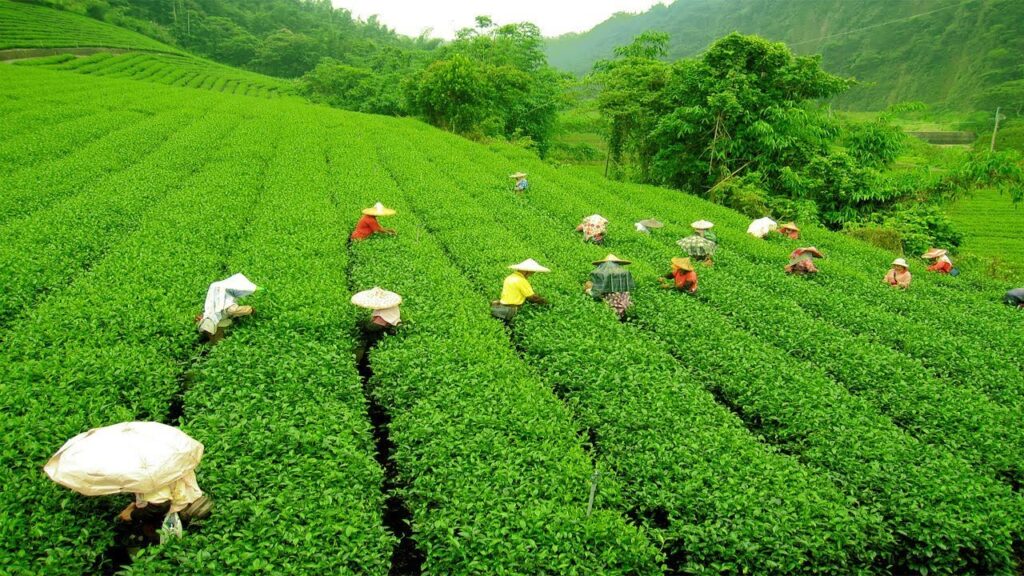
But this era of glory is under siege. Even as Darjeeling tea continues to be presented on international platforms—such as the G-20 Summit in 2023 and the World Food Summit in New Delhi 2024—the ground reality reveals deep distress. Production across the Darjeeling hills, Dooars and Terai is steadily declining. Experts fear that not only output but even the soul of the tea—the muscatel aroma—is fading. A senior tea official grimly remarked that many estates have “entered the ICU.”
Climate change lies at the heart of this crisis. Darjeeling’s prized First Flush relies on balanced winter moisture and mild spring warmth. But for over a decade, the region has suffered unseasonal rainfall, prolonged droughts and sudden heatwaves. Since 2014,or prior to it the disappearance of early-season showers has weakened new leaf growth. Tea bushes that once produced delicate, flavourful leaves now often stand barren or yield leaves too poor in quality to retain Darjeeling’s unique character. Nationally, India’s exports have declined from 52% in the 1950s to only about 12% today. In Darjeeling, the picture is more alarming: production that touched 10 million kg in 2007 now hovers around barely 2 million kg. Drought in plains have hit the hills equally and it is a veritable blow upon the tea yield in Darjeeling and possibly there is no way out from this climate crisis.
Although Chief Minister of West Bengal , in her recent tour in Dooras , categorically stated the her government doles out insecticides proof hand gloves , increased health care costs, extended ration rice and other food items , developed crèches for the welfare of garden children’s welfare , improved public transport system , but it has no bearing with the overall increase of Darjeeling teas.
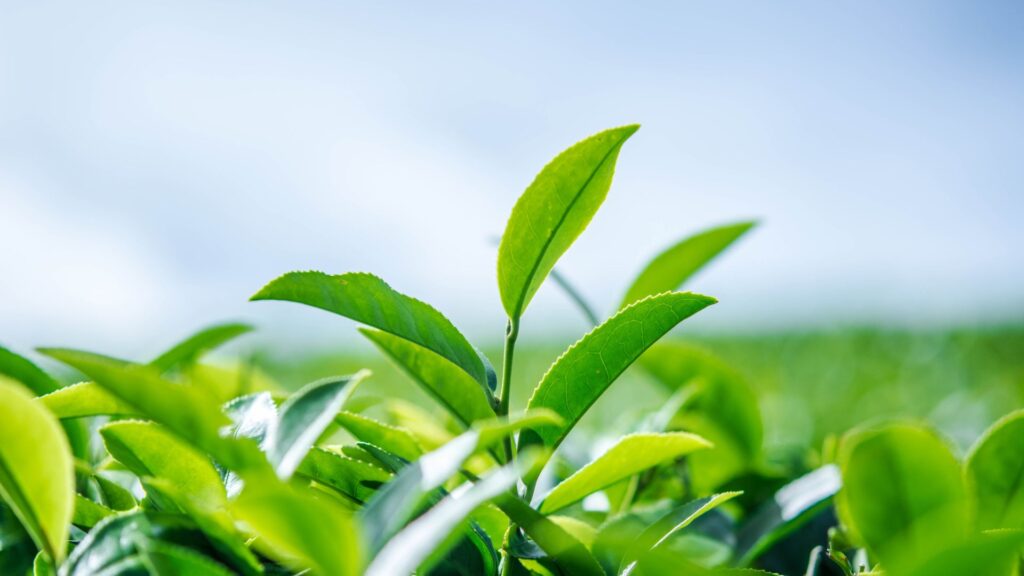
The Dooars and Terai face an equal ecological assault. Between April and June, severe rain shortages triggered massive attacks of looper caterpillars, red rust and fusarium. Losses exceeded ₹1,000 crore. At Gathia Tea Garden, for instance in dooars in Aliporeduar district daily harvests dropped from 25,000 kg to 15,000 kg. Gardens across Ranichera, Washabari, Dimdima, Hantabari, Suhasini, Barabari and estates in Kalchini, Mal, Dalgaon and Kumargram saw workers plucking pests instead of tea leaves. Scientists from the Tea Research Association admit that existing pesticides have become ineffective, pushing them to request stronger alternatives. But this creates a double crisis: stronger chemicals may violate global food safety standards, while weaker ones cannot control the infestation.
Production figures reflect the severity. According to the Tea Board, national output declined from 17 crore kg in September 2024 to 15.99 crore kg in September 2025. North Bengal’s output fell from 4.84 lakh kg to 4 lakh. In May 2023 alone, the state had a deficit of 6 million kg, with poor leaf quality compounding the issue.
Yet climate is not the only adversary. A more aggressive challenge comes from across the Nepal border. Nepalese tea—grown in regions like Ilam with similar Himalayan geography—resembles Darjeeling tea in appearance and flavour but sells for a fraction of the price: around ₹150–₹200 per kg compared to Darjeeling’s ₹3,000–₹4,000. For a decade, large volumes have entered Indian markets, legally and illegally, often blended with Darjeeling tea and sold under the GI tag. Retailers in Siliguri have packaged Nepalese tea using Darjeeling’s logo, damaging brand integrity. Despite repeated warnings from the Centre since 2017 to declare the country of origin on packaging, enforcement remains weak. Adulteration has flooded markets, eroding trust and depressing auction prices.
Indian estate owners argue that the GI tag becomes meaningless if the government does not protect its value through strict import checks and strong branding. Political instability, unpredictable crops and the infiltration of cheap imports have dragged down auction earnings. While large groups like Chamong, Goodricke, Ambootia and Makaibari export directly to Europe and Japan, nearly 35% of Darjeeling tea depends on domestic auctions—where adulterated competition crushes prices further.
Beyond economics, Darjeeling tea carries a legacy of heritage cultivation. Tea plantation practices introduced by the British in the 19th century were designed to nurture plants that could live for a century or more. Estates like Makaibari and Castleton still rely on bushes more than 100 years old, each plant a living relic of history.
Today, however, history alone cannot save the industry. The sheer barrage of challenges—climate shocks, pest attacks, labour distress, adulteration, falling auction prices, the collapse of export premiums and a shrinking global brand—looks ominous but not insurmountable. With strong government intervention, strict GI enforcement, better border control, scientific innovation, climate-resilient cultivation and perhaps a stroke of luck, Darjeeling tea can still regain its colour and aroma.
Darjeeling tea is not just a commodity—it is a cultural memory, an ecological treasure and a global brand built over 180 years. But unless immediate steps are taken, the fragrance that once enthralled the world may continue to fade, reducing a legendary heritage to a struggling industry fighting for survival.