






Santanu Basu
Santanu Basu is Former Professor of Political Science, Chanchal College, Malda
Connect: santanub12@rediffmail.com
In the context of acrimonious tariff war with US, heavy levies on cotton, the Government of India has withdrawn the import tariff on cotton, providing significant relief to cotton traders. This withdrawal, which exempts traders from paying the earlier 11% import duty, has also been extended to the agriculture and infrastructure sectors, offering broader economic relief.
However, India’s export sector—particularly marine products—has been severely affected by the imposition of a punitive 50% tariff by the United States. This has led to a sharp contraction in exports and a major disruption in the domestic market.
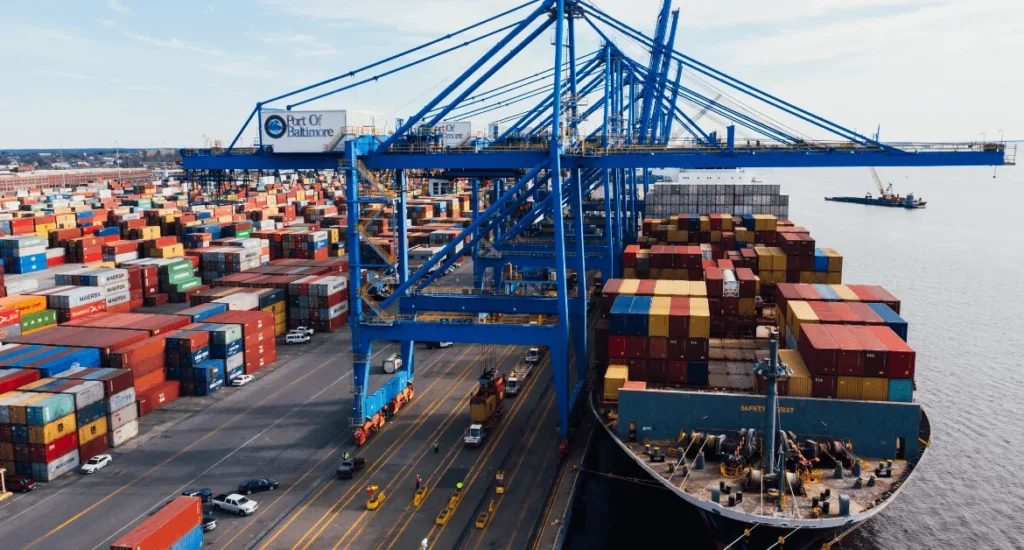
During the last financial year, India exported nearly 17 lakh tonnes of marine products valued at approximately $700 crore, generating revenues of around $500 crore. The United States alone accounted for imports worth $240 crore, making it a key and growing market for India’s marine exports. The imposition of the 50% tariff has dealt a severe blow to shrimp exports, especially impacting shrimp farmers in Andhra Pradesh, who are estimated to have incurred losses of nearly Rs. 25,000 crore, if not more. Shrimp constitutes nearly two-thirds of India’s marine exports, with export volumes far exceeding domestic consumption.
Total Marine Production in Andhra Pradesh
Of the total marine production in Andhra Pradesh—including shrimp, fish, oysters, and other saline-water products—about 35% was exported to the US. Due to the punitive tariff, nearly half of these exports have been disrupted, resulting in substantial financial losses for indigenous farmers. Andhra Pradesh alone contributes around 80% of India’s marine exports, making the scale of damage to the state particularly severe.
In reality, the tariff burden exceeds the stated 50%. When additional charges are included—25% penalty on the base tariff, 5.76% compensatory duty, and 3.96% anti-dumping duty—the total tariff burden rises to approximately 59.72% per container. Following this escalation, nearly 200 export containers have already come under the punitive tariff regime.
Chief Minister N. Chandrababu Naidu has drawn the attention of Prime Minister Narendra Modi to these losses and forwarded detailed representations to Finance Minister Nirmala Sitharaman, Commerce Minister Piyush Goyal, and Union Fisheries Minister Rajiv Ranjan Singh. Among the key demands are the withdrawal of GST in the domestic market and renewed efforts to negotiate trade agreements with Asian and European countries.
The export slowdown has also led to a sharp decline in domestic prices, severely affecting artificial aquaculture in water bodies and threatening the livelihoods of nearly three crore people dependent on the sector.
In contrast, countries such as Indonesia, Vietnam, Thailand, and Ecuador have benefited from comparatively lower tariffs—almost half of India’s—and steady marine production, giving them a competitive advantage in global markets.
Looking ahead, even if tariff tensions ease, India may find it difficult to regain its foothold in the US market. Therefore, alternative markets such as Russia, the UK, Norway, Switzerland, China, Japan, and West Asia must be actively explored. Additionally, diversification of shrimp products and culinary forms is essential to sustain export growth.
Beyond marine products, the punitive tariffs have also disrupted international trade in other sectors. India continues to lag behind Vietnam and Bangladesh in textiles, while the jewellery industry has also been adversely affected.
According to the Global Trade Research Initiative (GTRI), India’s overall exports of various commodities to the US market declined sharply by 22.2%. In May, exports stood at $880 crore, which fell to $690 crore subsequently. Following the imposition of a 10% tariff in July, the rate was increased first to 25% and then by an additional 25%, amounting to a 50% punitive tariff on Indian goods, primarily due to India’s import of Russian oil.
Intriguingly, even commodities outside the scope of the increased tariff regime experienced severe export disruptions. Products such as smartphones, pharmaceuticals, and petroleum products were adversely affected due to escalating costs. Exports of these items registered a decline of 41.9%. Between May and August, exports fell from $230 crore to $196 crore, reflecting a 49.1% decline. Smartphone exports alone dropped by 58%, while pharmaceutical exports declined by 13.3%. The artisans of Varanasi known for their intricate designing , artistry and unique designing in wooden furniture is equally hit by harsh tariff regime and export declined nearly 25% , but urged the government for cancelling all kinds of trade with US.
Exports of garments, apparel, and jewellery to the US plummeted by 93%, and cotton textile exports declined by 66.7%. In response to this severe contraction, GTRI recommended enhanced subsidies for affected exporting firms.
Despite these damaging consequences for Indian exports, former US President Donald Trump reportedly urged the European Union (EU) to impose a 100% tariff on Indian goods, citing India’s continued import of Russian oil, which he claimed indirectly finances Russia’s war against Ukraine. In September, during a meeting between the EU and the US, the US Economic Secretary Scott Bessent raised the demand for such a tariff. When questioned about why the US itself had not imposed a 100% tariff, a US spokesperson stated that the action would be taken jointly, with the objective of compelling India to cease purchasing Russian oil.
India currently ranks as the second-largest purchaser of Russian oil, contrary to the wishes of the US administration. Expressing frustration over growing India–China–Russia ties, Trump stated that he was disappointed at “losing India” despite his stated commitment to strong Indo-US relations.
However, Trump’s contradictory stance became evident when contrasted with his earlier remarks targeting the European Union, which he accused of unfair trade practices. He had threatened to impose harsh tariffs on EU countries to reduce the US trade deficit, demanding that the EU purchase more US oil and natural gas or face punitive measures.
The EU strongly opposed this approach, describing such statements as hostile and unacceptable. EU leaders argued that imposing tariffs on India and China was unfortunate and counterproductive, emphasizing that retaliatory tariffs do not foster healthy trade relations and inevitably lead to inflation. They warned that any US tariff imposed on the EU would be met with proportionate counter-tariffs. But India not remaining inert in the face of such huge adverse tariff impact showed steel nerves in continuing Russian oil at a concessional rate on the one hand while announcing Rs. 45 000 crores of monetary incentives to exporters for overcoming and navigating the unnatural burden tariff imposed by US. Of this, Rs. 25060 crores earmarked for ‘ Export Promotion Mission’ and Rs.20,000 allotted as Bank and other financial institutional guarantee for pushing the exports unabated. The export lobby find the tariff hike extremely difficult for sustain in the international trading domain and this monetary assistance would help easing Rs. 1 lakh crore export programme in the coming days.
A crucial question arises: why is Trump willing to risk imposing punitive tariffs across the globe which has the potential of denigrating his own image , and the likelihood of domestic backlash within the United States? One plausible explanation is that Trump is deeply unsettled by rising inflation, persistent unemployment, and the growing problem of illegal immigration, all of which threaten to undermine his core political slogan, “Make America Great Again” (MAGA). As these economic and social challenges intensify because of his self defeating policies , his rhetoric risks losing credibility, inviting criticism and ridicule from the opponents both from within and outside.. Trump is at a precarious position—to punish the world for saving his facade of image, he defeats himself and the Americans growingly disenchanted towards Trump. Noteworthy, largerchunks of Americans already started to dislike Trump for losing India as a great and trustworthy ally in the domain of commerce and technology. His previous regime excepting the period of Kennedy and Eisenhower, arduously built the pillars over a long period of time for a steady friendship with India which is nullified by single stroke of inconsistent Trump.
In this context, Trump appears increasingly desperate to narrow the ballooning current account and trade deficits, which continue to expand at an alarming pace and seem increasingly unmanageable through conventional policy tools. The presence of large numbers of undocumented immigrants, particularly from Canada and Mexico, is a glaring trouble. However, this approach overlooks a critical economic reality. The United States relies heavily on imports from its two neighbouring countries for essential commodities, including fruits, vegetables, agricultural crops, meat, automobiles, automotive machinery, wine and beer, steel, electronic goods, furniture, and infrastructure components. Any significant tariff hike on these imports would inevitably raise domestic prices, fuelling consumer resentment and inflationary pressures within the US economy, that again like to torpedo his MAGA slogan.
To justify punitive action, Trump frequently raises the issue of illegal immigration and extradition, using it as leverage to penalise Canada and Mexico. Yet, if these countries respond with retaliatory tariffs on American exports, the dispute could escalate rapidly into a broader economic confrontation, potentially evolving into a full-fledged trade or economic war.
Thus, Trump’s seemingly contradictory and aggressive tariff strategy risks intensifying economic instability on multiple fronts. Already US domestic markets witnesses at least 10% rice of prices of electrical goods which are mainly exported from this two countries instigating Rather than resolving structural imbalances, such unilateral and coercive measures may fragment global trade, deepen domestic inflation, and push international economic relations toward a more volatile and confrontational trajectory.