






Santanu Basu
Santanu Basu is Former Professor of Political Science, Chanchal College, Malda
Connect: santanub12@rediffmail.com
Kandi Municipality in Murshidabad district of West Bengal has set an innovative example by constructing a 2-kilometre-long plastic road using scrap plastic bottles, plastic bags, and other waste plastics. This initiative significantly reduces the burden of non-biodegradable waste scattered across the environment and society. Plastic has long been considered a major source of environmental pollution, particularly affecting soil and water over the years. It is expected that the burden of non-biodegradable waste will be reduced significantly if it is progressively used for road construction that have the potential to reduce the costs of traditional ingredients significantly.
The existing road from Kandi Municipality to Kandi Raj School has been renovated by blending nearly 30 percent waste plastic with conventional road construction materials. Members of the Nirmal Bandhu team under the municipality were engaged in collecting plastic waste from nearby areas and garbage dumps. Additionally, the municipality conducted frequent raids on shops and business establishments using or stocking single-use polythene bags, seizing large quantities of such banned items.
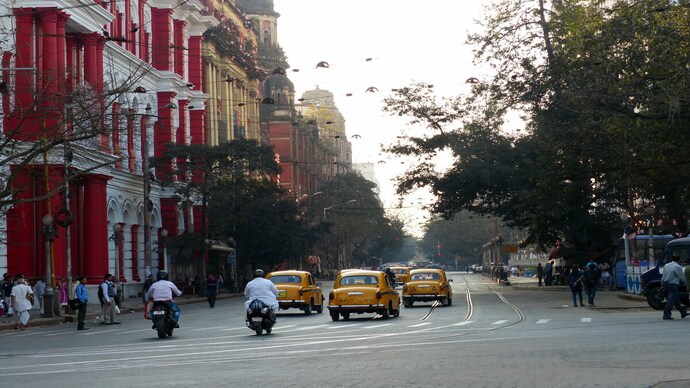
Nearly two lakh plastic bags, sixteen thousand plastic bottles, and about 350 kilograms of assorted plastic waste—otherwise lying idle and polluting the soil—were recycled and used along with conventional road-building materials such as stone aggregates, bitumen, sand, cement, and blue coloured to construct a 2-kilometre stretch of road under the Kandi Municipality. As a result, the heavy expenditure normally involved in building conventional metal roads was proportionately reduced , a model that can be emulated indifferent municipalities in the country.
Earlier, under the Plastic Waste Management Project (PWMP), Khagrabari-2 Gram Panchayat organised the collection of nearly 600 kilograms of waste plastic from 16 Gram Panchayat areas under Mainaguri Block 1 in Jalpaiguri district. This plastic was processed and mixed with bitumen for road construction. A small team comprising five women and one man worked diligently to cut the plastic into tiny pieces, making it suitable for recycling and reuse.
The results have been impressive. The plastic road resembles a sturdy concrete road and offers several advantages. This is particularly significant in regions like North Bengal—and across India—where newly constructed roads often develop cracks due to poor construction practices, leading to huge financial losses for the government. Corruption linked to so-called “road mafias” and illegal sand mining frequently features in newspaper reports.
This approach not only helps curb corruption but also saves public money on a larger scale. For a cash-strapped exchequer, the innovative use of plastic waste in infrastructure development offers much-needed relief while promoting environmental sustainability.