








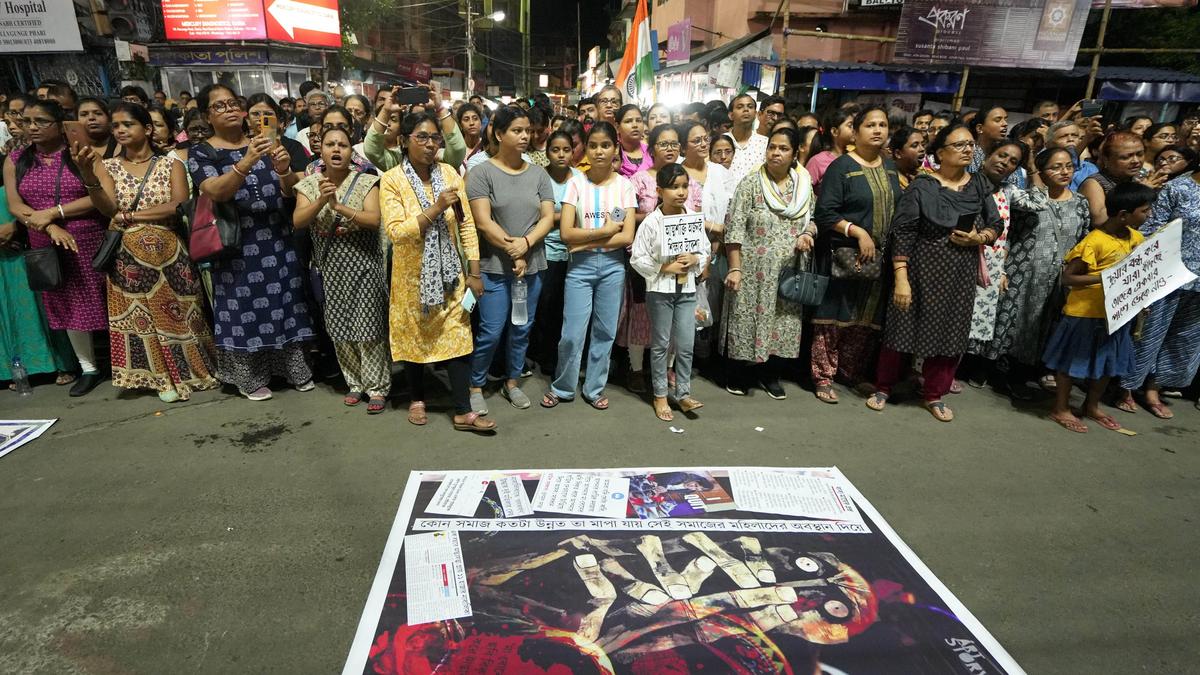
Kolkata, once lauded as one of the safest cities for women in India, is now reeling under the weight of yet another horrifying case of sexual violence
Santanu Basu
Santanu Basu is Former Professor of Political Science, Chanchal College, Malda
Connect: santanub12@rediffmail.com
Again . Kolkata, a city once fondly termed the “City of Joy” by French author Dominique Lapierre, now finds itself grappling with a disturbing and escalating crisis of sexual violence and crime against women . This transformation is not one of progress, but a harrowing descent into a cycle of assaults, some shockingly occurring within institutions meant to embody safety, learning, and justice. The recent gang-rape of a female student at South Calcutta Law College, allegedly perpetrated within the guardroom itself, underscores a profound breakdown in safety and accountability that demands immediate and comprehensive attention.
The latest incident at South Calcutta Law College, where a student was allegedly gang-raped by individuals including a self-proclaimed political leader affiliated with the Trinamool Chhatra Parishad (TMCP) and a temporary non-teaching employee of the college, a lawyer by profession, has sent shockwaves through society. Compounding the horror, a college security guard reportedly vacated his post to facilitate the crime in his chamber, while two students allegedly stood by and “guarded” for the continuation of the crime. All four individuals have since been arrested, but the alleged connivance of the guard and the others in attempting to hush up this horrendous act points to a deeply entrenched malaise. The involvement of individuals with political affiliations in such crimes raises serious questions about the influence of political power in shielding perpetrators and undermining institutional integrity.
This heinous act, committed within the walls of a reputed law institution, a space that should nurture ethics, justice, and learning, has once again exposed the urgent concerns about safety and accountability within West Bengal’s educational campuses. It is reported that the rape survivor finally groaned to say, I came to this institution for rendering legal redressal and justice to the sufferer of the society , but I myself now fall victim to a beastly force. The implicit message , the law learner while interning justice delivery mechanism to a rape victim and other afflicted, fall victim to rape! What a terrible cry of a women subjected to most heinous crime inside the college campus ! Beyond the immediate tragedy, the sanctity of educational institutions is now under severe scrutiny which is hopelessly absent in the ethos of Chief Minister in this state. Nearly two weeks have passed since the horrendous crime, there is no admonishment , set aside any stricture against the crime on the part of Chief Minister who is also a women. She never swears for stopping this crime! The distressing sequence of rape cases in West Bengal, particularly in Sandeshkhali, Hanskhali, R.G. Kar Medical College, and now South Calcutta Law College, continues to bring immense disgrace to the state. The glaring silence of law enforcement and, more significantly, the woman Chief Minister, fuels the theory that the administrative apparatus is prone to cover up such incidents for electoral considerations, rather than nipping crimes in the bud.
The perceived leniency of the administrative hierarchy towards perpetrators, coupled with its aggressive stance against dissent – as seen in the reported harassment of a London-based Indian doctor for raising questions about the “Abhaya” murder during CM’s tour in London – further tarnishes the state’s image. The doctor’s questioning of a murder in London led to his apprehension in Kolkata, illustrating a troubling tendency to suppress critical voices instead of addressing the root causes of the crisis. The Chief Minister is so revengeful against dissent that she hardly hesitates to send police during night no nab the protestors who took part in Night Reclamation programme some ten- eleven months back in Kolkata against the dastardly killing of the female doctor.
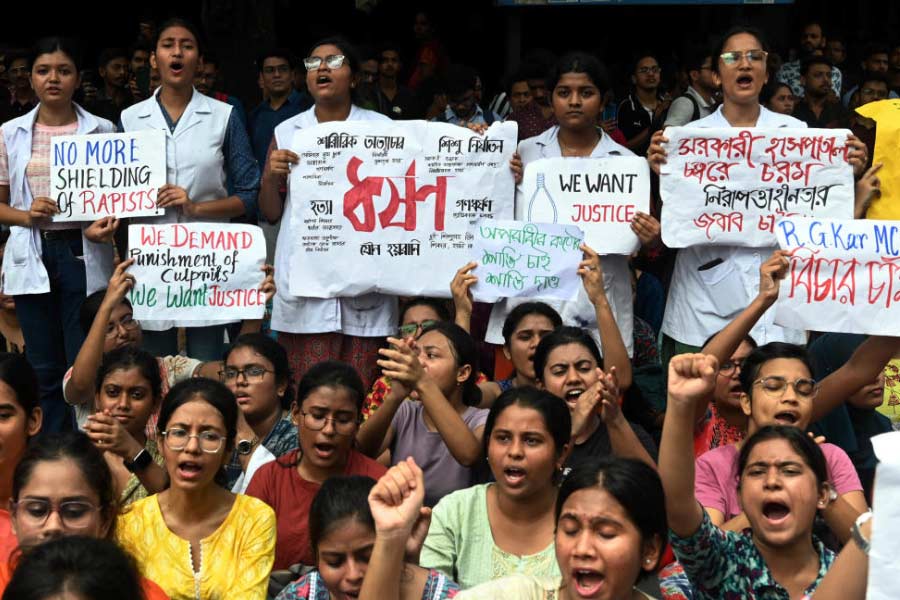
The South Calcutta Law College assault echoes eerily, coming less than a year after the brutal rape and murder of a young female doctor, known as “Abhaya,” at Kolkata’s R.G. Kar Medical College and Hospital in August 2024. Abhaya was attacked inside a seminar hall within the college premises, an incident that sparked widespread outrage both nationally and internationally, particularly within the medical fraternity. In the cruel most attack upon the doctor , her bones in different parts of the body and mouth was fractured and bludgeoned grievously. Oh! A would be lawyer is brutalised by the rapists , while a doctor is raped and killed! This case exposed alleged complicity of senior college officials, including then-principal Sandip Ghosh, and highlighted the deeply embedded rot within state-run institutions. Abhaya’s courageous stand against rampant corruption, including the siphoning of medical equipment and inflated billing scams, tragically cost her life. August 9 will mark her first death anniversary, a poignant reminder of a justice system still struggling to uphold the dignity and safety of its women. Same ‘we’ have observed 1 July , the birthday of legendary doctor , Bidhan Chandra Roy as national doctors day. We can’t endure the irreconcilable contradiction and antagonism for simultaneous observance of 1 July and 9 August , the later being a day of shame contrary to the former day of national glory.
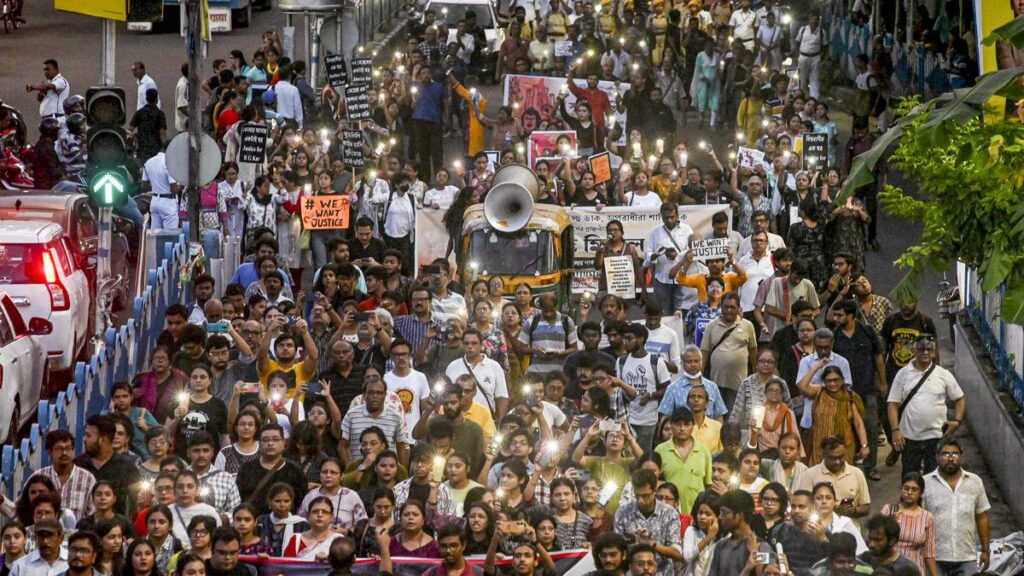
The law college assault mocks Abhaya’s memory, underlining a disturbing pattern of lawlessness that now seems to permeate even the most sacred institutions – medical colleges, law schools, and even primary schools. Another gut-wrenching case involved a 9-year-old girl in Malda, who was raped in a school classroom by Rafiqul Islam, a retired school teacher and Trinamool Congress leader, during the post-poll violence of 2021. Her only ‘fault’ was her family’s support for the BJP in the preceding state election. In a rare instance of justice, the Malda District Sessions Court (Second Court) sentenced the offender to life imprisonment and fined the state ₹6 lakh for its failure to protect the child. This judgment, delivered significantly after four years of CBI investigation, marked the first conviction in the post-poll violence cases investigated by the CBI, implicitly highlighting the countless victims and rape survivors awaiting justice from that period. The brutal violence, affecting even women and students during elections, as evidenced by the disappearance and subsequent death of a school teacher acting as a presiding officer in rural areas of Raigunj in the last panchayat election, underscores the pervasive nature of this crisis.
While West Bengal, and particularly Kolkata, has often been projected as relatively safer for women compared to some other parts of India, recent data and incidents paint a grim picture. According to a 2011 report by the Times of India, West Bengal accounted for 11.4% of the total recorded crimes against women in the country in 2009, a disproportionately high figure given its 7.6% share of India’s population. While some officials argue that higher reporting might contribute to these numbers, the gravity of the crimes remains undeniable.
More recent data reveals a concerning backlog in West Bengal’s legal system. Despite the allocation of Fast Track Special Courts (FTSCs) to expedite cases, the state has a pendency of 48,600 rape and POCSO (Protection of Children from Sexual Offences) cases, as of August 2024. The Union Ministry of Women and Child Development has criticized the West Bengal government for failing to operationalize many of the allocated FTSCs and for not implementing crucial emergency helplines such as the Women Helpline (181), Emergency Response Support System (112), and Child Helpline (1098). This administrative inertia directly impacts the timely delivery of justice and the safety of women and children.
Furthermore, the Nirbhaya Fund has been established to support projects for women’s safety and security, with significant allocations for initiatives like Safe City Projects in major cities (including Kolkata), which involve CCTV cameras, smart lighting, and improved police response. Strengthening forensic science facilities and training of investigation, prosecution, and medical officers on forensic evidence collection (through Sexual Assault Evidence Collection Kits) are also key aspects. The government has sanctioned funds for Women Help Desks (WHDs) in police stations and Anti Human Trafficking Units (AHTUs) in all districts. One Stop Centres (OSCs) provide integrated support (medical, legal, counseling, shelter) to women affected by violence, and a scheme for Universalisation of Women Helpline (181) aims to provide 24-hour emergency and non-emergency response.
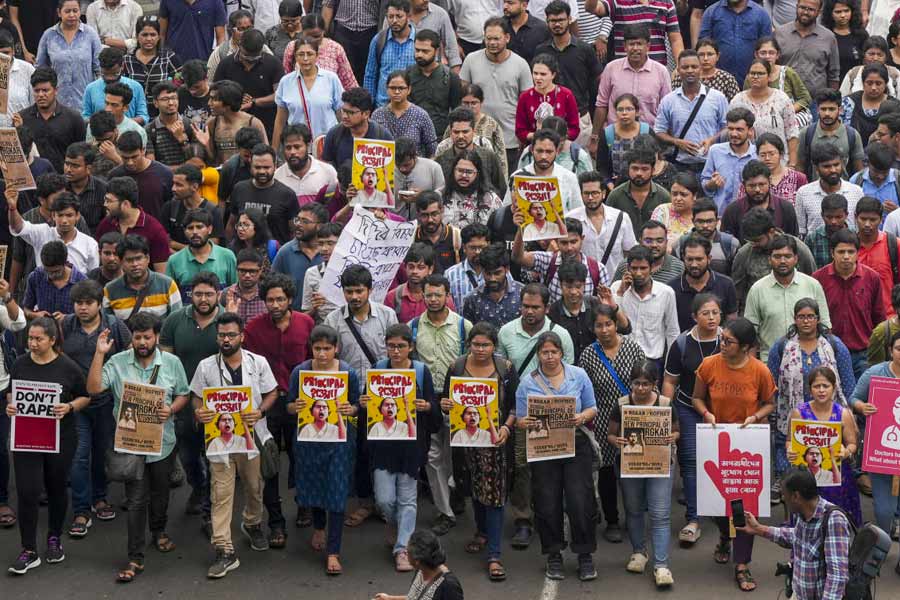
Kolkata, once a citadel of Bengal’s renaissance – the birthplace of medical education, women’s emancipation, and cultural flourishing, associated with visionaries like Raja Subodh Mullick, Nilrattan Sarkar, Acharya Prafulla Chandra Ray, and Dr. Bidhan Chandra Roy – is today witnessing a rapid moral collapse. Against this backdrop of glorious traditions in our country , we can’t come to terms with present day reality ie, molestations, rape and cycle of violence. The involvement of political affiliates in repeated sexual crimes reflects a deeper crisis in governance. Administrators, instead of upholding academic sanctity, are enabling rogue elements through silence and inaction.
Kolkata, and indeed West Bengal, must now confront this decline head-on. Mere outrage or symbolic gestures will not suffice. Women’s safety must be redefined as a structural imperative – not just a slogan. This means urgent and unflinching reforms.
There must be no refuge for rapists – not in hostels, guardrooms, classrooms, or political unions. Every girl and woman in this state has the right to safety, dignity, and a future shaped by dreams, not nightmares. If Kolkata still wishes to call itself the “City of Joy,” it must first break the deafening silence. It must confront the predators within, dismantle the networks of complicity, and reclaim its institutions. Safety is not earned through rhetoric; it is earned through decisive and unwavering action.