



In recent years, West Bengal has witnessed a surge of government schemes promoted as welfare measures intended to uplift women, workers, and marginalized communities. While many of these initiatives appear progressive on paper, the underlying reality is far more troubling. The state has been increasingly relying on borrowings to fund these programs, creating patterns of unsustainable expenditure and rising debt. The widening gap between political promises and the actual financial health of the state is pushing ordinary citizens toward long-term economic uncertainty.

Lakshmi Bhandar
The Lakshmi Bhandar scheme is a clear example of welfare becoming political strategy. Introduced ahead of civic elections, it offers Rs. 1,200 per month to women from Scheduled Caste and Scheduled Tribe communities and Rs. 1,000 to those from other backgrounds. For poorer households struggling to manage basic needs with minimal per capita income, this brings short-term relief. But when the benefit is extended to even financially stable families, it drains the exchequer without ensuring targeted improvement in livelihoods.
The ripple effect is already visible: the BJP-led government in Maharashtra has adopted a similar model, raising concerns that competitive populism may soon overshadow fiscal responsibility across states.
A comparable trend has emerged in other regions. In Bihar, the Nitish Kumar government, supported by the Centre, announced Rs. 10,000 under the Mukhyamantri Mahila Rojgar Yojna before the upcoming elections. In response, Opposition leader Tejashwi Yadav escalated his own promises—first Rs.2,500 per woman per month, and then Rs.30,000 in a one-time payment. Such auction-style welfare politics turns public finances into tools of electoral competition, replacing economic prudence with political opportunism.
In West Bengal, the Shramashree scheme, introduced after a series of tragic migrant worker deaths, provides Rs. 5,000 monthly assistance to returning laborers for up to a year or until they find employment. Though compassionate in intention, the scheme lacks a structured system for skill enhancement or employment generation. As a result, it promotes dependency rather than sustainable empowerment. More importantly, the Rs. 5,000 dole promised by the Chief Minister failed to enthuse migrant labourers, as they consider the amount far too meagre compared to their earnings outside West Bengal. This monetary incentive, not linked to any form of employment, is largely unproductive and places an additional burden on the already strained state exchequer. The handout, viewed by migrant workers as mere eye-washing, has generated little enthusiasm, with many preferring to seek employment outside West Bengal instead.
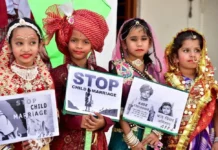
The state government continues to promote Kanyashree and Rupashree as symbols of women’s progress, even setting a target of reaching one crore beneficiaries by 2026. However, the data tells another story. The National Family Health Survey (2019–21) reports that 41% of girls in West Bengal are married before turning 18, which is double the national average. In several districts, the percentage exceeds 50%. Additionally, adolescent pregnancies have increased in at least seven districts, contributing to long-term health and economic setbacks. These trends undermine the very purpose of the schemes, which claim to advance women’s autonomy and well-being. Another much-publicized programme of distributing tablets to students of Class XII, introduced during the COVID-19 pandemic to compensate for the loss of curriculum due to the closure of schools and colleges, continues even today. This scheme has further increased the indebtedness of the state government by nearly Rs.3,000 crore per year. While such assistance was, to some extent, justified during the complete lockdown period, the continued practice of free tablet distribution has failed to achieve its basic objective of reducing dropout rates. On the contrary, it has been observed that after receiving the grant, many students migrate to other states in search of employment. Thus, the scheme has practically backfired and failed to deliver its intended objectives. Meanwhile, decisions regarding financial allocation raise further concern. The government’s move to distribute Rs.500 crore to over 40,000 Durga Puja committees—about Rs. 1.10 lakh to each—has been widely criticized. Festival grants have been issued repeatedly, even though many committees fail to provide audited expenditure reports. This unchecked disbursal of public funds, especially when the state is already burdened by heavy debt, points to political spending disguised as cultural patronage. The Calcutta High Court has already expressed dissatisfaction over such unregulated distributions, calling them financially irresponsible. An elected government must remain vigilant in matters of revenue and expenditure, maintaining a stable balance to protect and consolidate the public exchequer. In practice, however, many state governments engage in fiscally irresponsible policies for short-term electoral gains. Such actions amount to financial sabotage and often result in large current account deficits. There is no room for financial profligacy where the hard-earned public exchequer is concerned.
The situation is worsened by the continued denial of full Dearness Allowance (DA) to government employees. Despite the High Court’s ruling that DA is a legal right, state employees receive only 18% DA compared to 55% for central employees. The contrast between lavish spending on festival optics and the withholding of rightful dues reveals a governance model that prioritizes political convenience over public welfare.
The expansion of the Civic Police Volunteer system has also drawn scrutiny. The Supreme Court has questioned the legal validity of this force, suggesting that it operates more as a network of political patronage than as an institution of public service. These recruits, appointed outside constitutional procedures, consume public funds while regular employees await their entitled benefits. This reflects a steady erosion of administrative fairness and institutional integrity.
The dangers of such misguided governance are not theoretical. Across the world, nations have faced severe crises after pursuing aggressive welfare spending without securing sustainable economic foundations. Sri Lanka’s collapse was driven by subsidies and reckless borrowing. Pakistan continues to seek IMF bailouts. Bangladesh struggles with rising inflation and falling reserves. Maldives is weighed down by Chinese debt. Zambia defaulted on loan repayments, leading to currency instability. Nepal, heavily dependent on remittances, now struggles to meet rising expenditure. These examples serve as clear warnings of what happens when welfare becomes political theatre instead of developmental planning.
West Bengal now stands on a similar precipice. In just the third quarter of the current financial year, the state borrowed Rs.29,000 crore. Total borrowing may cross Rs1 lakh crore by March. The state’s outstanding debt is nearing Es.7 lakh crore. Yet, only around Rs. 9,000 crore has been directed toward infrastructure development; the rest funds recurring welfare commitments that require continuous renewal.
Borrowing to create assets can strengthen a state. Borrowing to meet everyday expenses, however, leads to a cycle of permanent dependency. If this path continues, the average debt burden in West Bengal may soon exceed Rs.72,000 per person, meaning a child born today inherits debt rather than opportunity.
A responsible government must build institutions and systems that uphold financial stability beyond electoral cycles. Fair wages, strong infrastructure, transparent governance, and opportunities for the youth form the foundation of a healthy society. When these foundations weaken, the cost is borne not in numbers but in lives.
Economic decline does not arrive abruptly—it moves quietly, accumulating through a series of small, avoidable decisions. West Bengal still has the chance to prevent that decline. But doing so requires fiscal discipline, accountability, targeted welfare, and a shift from political optics to genuine development.