









Teachers, well-meaning guardians, and parents across the state are deeply worried by the alarming decline in school and college education, with little sign of relief from a crisis that has been decades in the making. People are aghast at the serious and widespread downfall of educational standards at every level—from primary schools to universities and research institutions. The present educational malady is so deeply rooted and students so thoroughly disenchanted with the prevailing rigmarole that schools and colleges appear destined to fade into irrelevance in the near future. Student dropouts across all levels have emerged as one of the serious threats to the education system and effective curriculum delivery. At the Madhyamik and Higher Secondary levels in particular, persistent and large-scale absenteeism has become a serious concern, embedding itself ever more deeply in the institutional psyche. Teachers themselves openly admit their helplessness in reversing this ominous trend. We are already hearing alarming reports of eight to ten thousand schools having closed their shutters either because of complete shortage of students or teachers.
Despite repeated exhortations and counselling by class teachers in different districts , a section of students remains unrelenting, indifferent, and disengaged from regular classroom teaching. Many teachers, driven by moral responsibility and going beyond their official duties, have personally visited the homes of chronically absent students. These visits have revealed a disturbing reality: the guardians of such truants often display marked apathy toward their wards’ attendance and academic progress. In one subdivision of Bardhaman—Katwa, for example nearly 74 High and Higher Secondary schools report stable enrolment figures only on paper, while actual attendance remains dismally low. A major contributing factor is the growing dependence on private coaching centres, which has led students to perceive regular school classes as non-essential. Field-level studies and common student practices testify to a growing disinterest, strong dislike, and even derision toward government and government-sponsored schools.
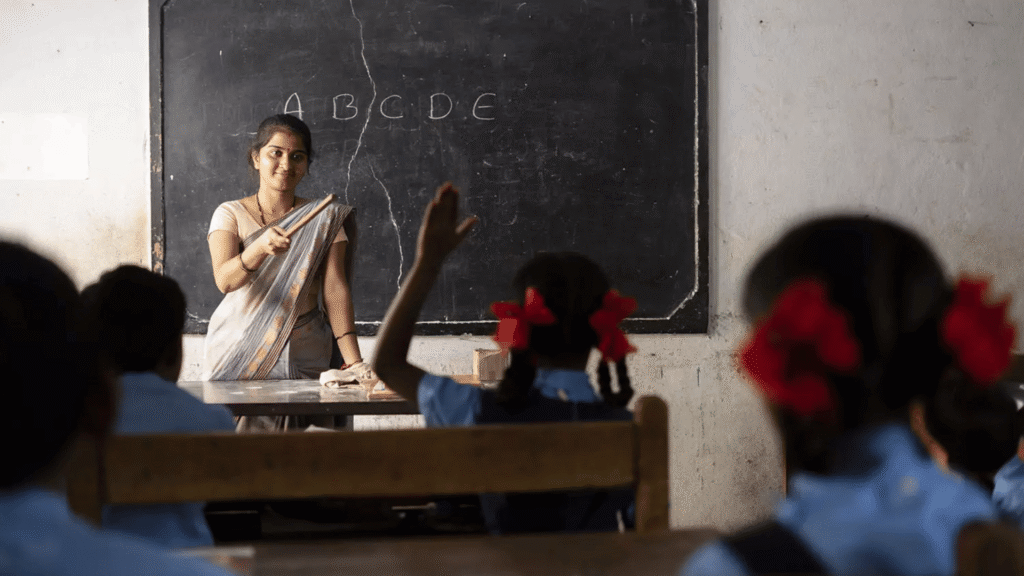
Students increasingly view government schools as useless, irrelevant, and redundant institutions, serving no meaningful purpose for present-day learners. They believe that degrees obtained from such schools do not enhance employability in the job market. In reality, these schools are seen merely as helpless entities—or charitable organisations—meant to distribute benefits such as Sabuj Sathi bicycles, Kanyashree and Rupashree grants, and mid-day meals at huge cost of public exchequer but with no positive results. It failed to live up the spirits of the students nor it revamped the educational infrastructure. The students consider this as sheer lottery item and not as a recognition of their educational achievement making the whole grants a waste product. So such gratuity in the schools failed to stem the educational rot – the drop out which is as pervasive like before.
This perception has fostered a troubling mindset among students
Government schools exist only to dispense cash or material benefits and contribute nothing to their intellectual or personal development. Consequently, whenever a government school attempts to increase monthly tuition fees beyond the government-stipulated 240, for bearing the recurring expenditure as a substitute of composite grants , students and guardians alike do not simply protest the decision , nor do they hesitate to hurl abusive languages to the head of the institution ; they often resort to rude and blatant heckling of headmasters or headmistresses in the name of the Right to Education , an act passed by our Parliament in 2006. In other words, the Right to Education is being mocked daily within our educational precincts , as it appears to ensure a tuition-free and cost less system while faltering in its fundamental responsibility of maintaining educational standards—the very ideals envisioned by Babington Macaulay, Raja Rammohan Roy, Vidyasagar, and a host of other great intellectuals some two hundred years back. But current days schools are steadily being stripped of their prestige and dignity, while students openly vilify the very institutions meant to educate them , in connivance with outside handlers. An obvious offshoot of the Right to Education Act is the practice of virtually no detention or zero detention, whereby learners scoring anywhere between zero and six or seven in the ‘examination’ are promoted to the next class—a policy that has dealt a severe blow to the entire education system. A zero learning or no learning is a veritable blot on our system and keep the students away from the domain of knowledge.
The denigration and dishonour faced by present-day schools in Bengal are not only unfortunate but unprecedented in the history of Bengal. Notably, our school system has had far stronger foundations since the time of those reformers like Thomas Babington Macaulay, the great British educational reformer of the nineteenth century. In fact, Macaulay’s contributions and Wood’s Despatch form the foundational pillars of our modern education system. Yet, in the post-independence period, we have been taught to detest and vilify these intellectual figures for their alleged snobbery, pedantry, vanity, and sense of superiority—even as our education system has progressively deteriorated ; such unchecked deterioration are largely the fallout of highly defective and totally self defeating educational policies and measures pursued by current day dispension.
The Chief Minister of West Bengal, Ms. Mamata Banerjee, appears to be driven largely by populist considerations and shows scant regard for the academic curriculum of educational institutions. She declares holidays for government-run schools seemingly at will , perhaps without thinking the fall out of such declaration ; Prolonged closures are often announced due to sweltering heat or excessive rainfall, without issuing any clear directives for restructuring or readjusting the academic schedule. In contrast, privately run schools frequently continue their programmes during the same period without disrupting their class schedules. In her pursuit of populist appeal through the declaration of emergency holidays for schools and colleges, little attention appears to be paid to the significant climatic differences between South Bengal and North Bengal. While North Bengal does not experience the same degree of sweltering heat as South Bengal in case of the preceding period of summer holidays , but holidays are declared uniformly across the state. The outcome, in both regions, is the same—heightened truancy and further disruption of academic continuity. The Chief Minister is also often seen declaring extended holidays for schools and colleges—sometimes lasting twenty to twenty-five days—and linking them with scheduled summer vacations. This results in cumulative and large breaks stretching to two months or more at a time, further encouraging truancy, deepening academic disengagement, and pushing students increasingly toward private coaching. Unexpected school holidays can also have a harmful impact on the mental well-being of teachers feeling restless unable to teach. But the CM is only concerned with her authority of just closing down the state run schools. Now when the state’s authority starts tinkering an inviolable schedule otherwise considered sacrosanct, it does not augur well at the down stream of the administration; Most of the schools in our state indulge in self defeating game – they allow the students to leave the schools before the last period as there is no check or vigilance upon the headmasters or headmistress – this aspect was intensely emphasized by other than Vidyasagar – the stalwarts of renaissance in our state.
In the academic session 2025, the number of successful candidates of the Madhyamik Examination was 565,000. However, not all enrolled candidates registered for the Higher Secondary (HS) Examination. Nearly 10–15% of students did not continue in the HS stream.
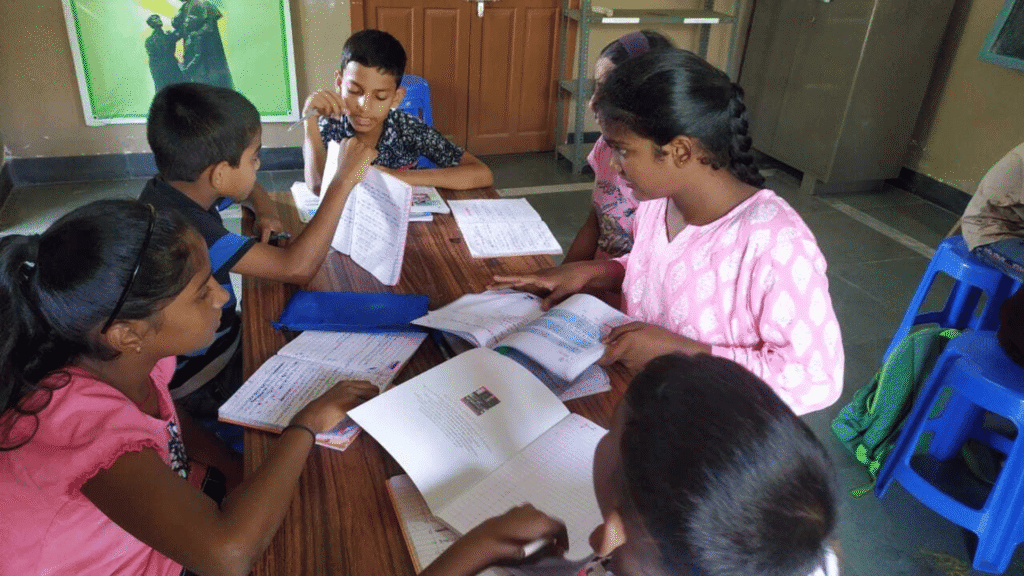
A concerning trend has been observed among students admitted into Class XI. Many of them begin disappearing after receiving a grant of Rs. 10,000 under the Taruner Swapna scheme, which is intended to help them purchase tablets for their studies.The school authorities are deeply worried about this trend. The Council of Higher Secondary Education has been informed that after crediting the sum of Rs. 10,000 from the Government of West Bengal for tablets, students start leaving classrooms with the intention of never returning. Despite the schools’ efforts to contact these students and encourage them to resume their studies, these attempts have proven largely unsuccessful.
In 2024, around 9% of such students dropped out, and the situation is expected to worsen this year because in previous years, when only Class XII students received tablets , Class XI students have also been provided with tablets this year. Reports from various high schools in Purulia in September present an equally grim picture, with a large number of students remaining absent after the grant of Rs. 10,000 for tablets was credited to their accounts.
According to reports, nearly 15% of students did not submit forms for the first semester of Class XI. Although about 30,000 students received Rs.10,000 for purchasing tablets, only slightly more than 26,000 students submitted their first-semester forms. At Baram High School in Arsha, only 104 out of 140 students appeared. In three schools in Bandowan, 36 students were absent, while 20 students from RBB High School and 11 students from Malti Jilpa Laya High School did not turn up for the first semester.
A teacher revealed that many students seek admission mainly to receive the tablet grant rather than for academic purposes. Students are aware that even after completing higher secondary education, admission to general degree colleges does not guarantee employment. As a result, many leave school after receiving the tablet and migrate to other states in search of income, even if it is meagre.
Teachers’ associations have squarely blamed the situation on poor infrastructure and an acute shortage of teachers. At the middle level, between Classes V and VII, dropout rates are significantly higher among boys than girls. This worrying trend was highlighted in a recent report submitted to the state’s Education Secretary, Binod Kumar, by the Burdwan district authorities. The report noted that the gender gap in dropout rates becomes even more pronounced at the Madhyamik and Higher Secondary levels.
Another report indicated that dropout rates at the Madhyamik and Higher Secondary levels in Burdwan are higher than the state averages of 12.11% and 10.19%, respectively. Explaining the reasons behind the higher dropout rates among boys, the Headmistress of Ichalabad Girls’ High School said that boys are more often pushed into agricultural work and factories to earn income than girls. The utterly decaying condition of our school education system can still be reversed, but only if there is serious, thoughtful intervention by the ruling elites and the bureaucracy. One crucial step would be the sincere reintroduction of the English-based education model, particularly the pass–fail system, without dilution or compromise. The weakening of the examination system lies at the root of most of our present educational failures.
Despite their undeniable ruthlessness, the colonial rulers laid a strong foundation for education in this country. Their system emphasized iron discipline, regular mental exercise, rigorous study of textbooks, and, above all, a strict pass–fail mechanism. Any deviation from this model is bound to lead to disaster across all spheres of education, including medical education. It is worth recalling that our state once served as a torchbearer of medical and scientific education under British rule. Headmasters and headmistresses of primary schools at the grassroots level, as well as principals of colleges, medical colleges, and vice-chancellors of universities, must be granted adequate authority to manage day-to-day administration without interference from political or other so-called “influential” elements. For the sake of truth, it must be acknowledged that many schools and colleges have deteriorated into spaces of disorder and intimidation, where criminal elements exert undue influence and run amok —an unthinkable situation during the British period.
Today, the rot—especially in medical education—is so pervasive that our standing has fallen to the lowest levels in the country. The situation is, to say the least, deeply disturbing. Senior authorities in medical education allegedly allow academically inferior students to advance to higher classes in exchange for favors and bribes. Mass copying in medical institutions was unthinkable during the British period and even in the early decades after Independence. Today, however, conducting fair examinations in medical colleges without monetary transactions has become almost unimaginable. While ‘decomposed body’ is a Today, the rot—especially in medical education—is so pervasive that our standing has fallen to the lowest levels in the country. The situation is, to say the least, deeply disturbing. Senior authorities in medical education allegedly allow academically inferior students to advance to higher classes in exchange for favors and bribes. Mass copying in medical institutions was unthinkable during the British period and even in the early decades after Independence. Today, however, conducting fair examinations in medical colleges without monetary transactions has become almost unimaginable. While ‘decomposed body’ is a common term in medical parlance, the condition of many medical colleges today reflects a similar and horrible state of decay.
Quite recently, a newly appointed Vice-Chancellor at Gour Banga University in Malda attempted to introduce a basic framework of discipline by enforcing five hours of mandatory duty on the university campus and restricting arbitrary early departure by the staff. However, the initiative met with strong resistance, as sections of the teaching faculty reportedly united against the Vice-Chancellor and heckled him. Kolkata once proudly housed the first medical colleges in Asia and set bright examples before the world but now this legacy is engulfed in utter decay. If mass copying can occur in medical institutions, one must ask how much further the rot can spread among the fraternity. In contrast, general education today has entirely done away with the pass–fail system, further accelerating the decline.