
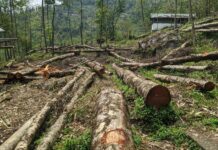







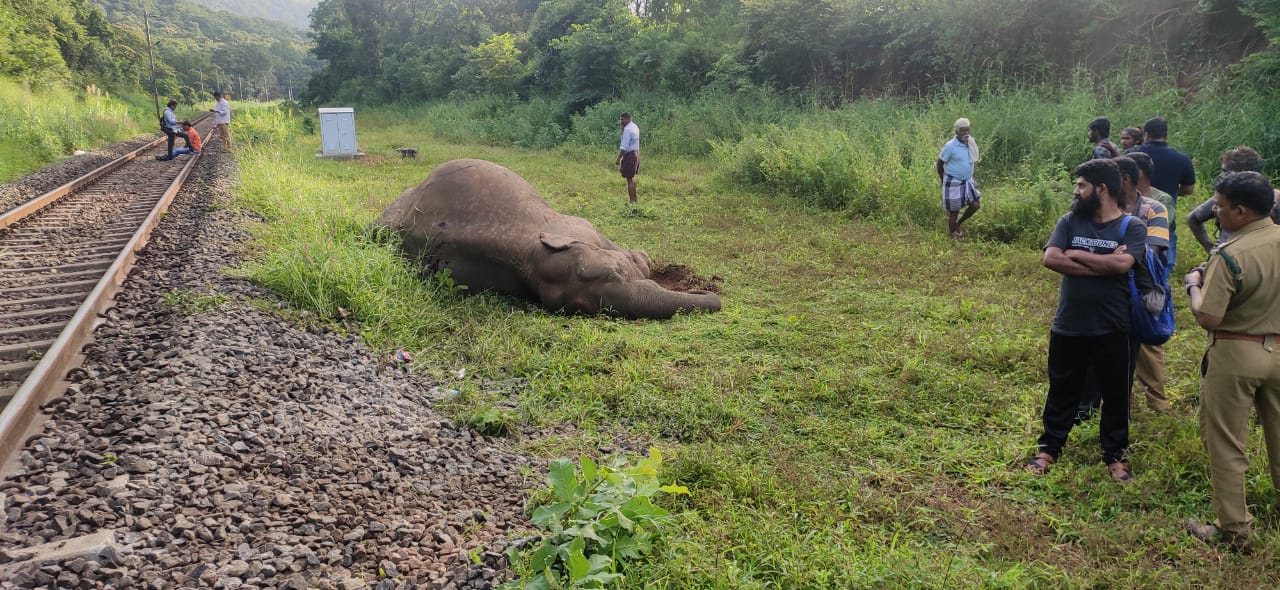
Has Indian Railways—particularly the Northeast Frontier (NF) Railway zone—turned into a killing zone for elephants? The question has gained traction after repeated fatalities, prompting angry citizens to sarcastically suggest nicknaming it the “Elephant Killing Railway Zone ” or for that matter a burial ground for the elephants!
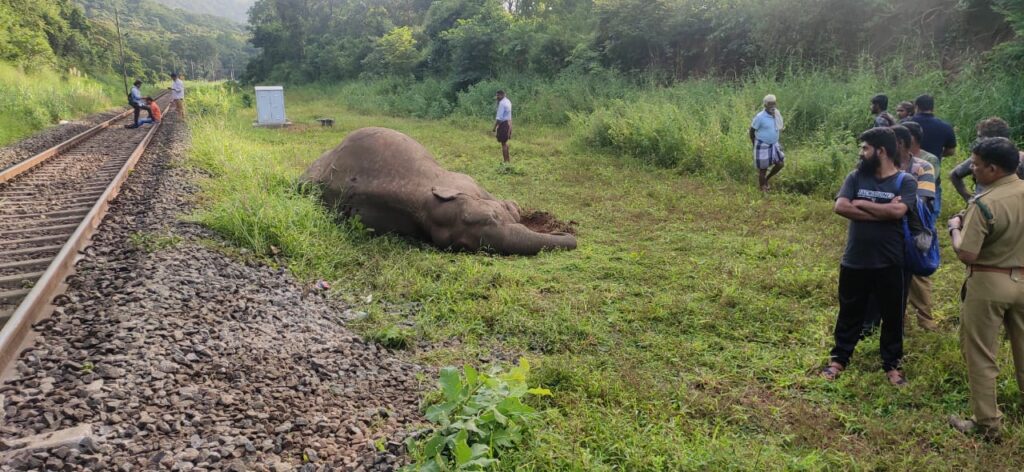
The shock deepened on the night of 20 December, when eight elephants were killed in Jamunamukh- Kampur station after being hit by the speeding Sairang–New Delhi Rajdhani Express under Lamding Division in Hozai district. In the biting winter cold and dense fog, the animals were moving along the railway track in search of food—a behaviour increasingly common as forest habitats shrink and corridors are fragmented. A high-speed train left them no chance of escape. The bodies of the pachyderms are smashed beyond recognition as what had happened in Sairang –Rajdhani Express . Lamding Division was , formerly under North East Frontier Railway. This rakes up the dreadful memory when as many as 13 to 15 pachyderms met with severe casualties near Banarhat station under Maraghat forest range 13 years back .
A Grim Reminder
The ploughing of such a large number of elephants by the Sairang Rajdhani Express is a grim reminder of a similar tragedy that occurred seven years ago, when a herd of four elephants was struck by the Silchar Fast Passenger in the same Lamding Division of Hojai district, killing all the animals.
The killing zone and the railway tracks involved in both incidents are similar, yet there is a significant difference between the two. In the earlier case, the crew members of the passenger train had specific information about the movement of elephants along the tracks. They were even warned through torchlight signals about the imminent movement of the herd, but despite this, the collision could not be prevented.
Such gruesome killings of elephants on railway tracks led to serious altercations with the Forest Department of the Lamding Division, which charged the Railways with a complete failure to protect pachyderms straying onto the tracks. The Forest Department had already provided the Railways with adequate information about elephant corridors in the Lamding, Lanka, and Hojai forest ranges, numbering 19 in total.
Such diabolical scenario remained itched in public conscience. Witnessing the death of multiple elephants—intelligent, social, and protected animals—under the wheels of a prestigious train raises disturbing questions — how long the neighbouring residents have to live with such deadly realities? Along these routes, it is difficult to name a single train that has not been involved, directly or indirectly, in elephant fatalities. Collisions between trains and elephants have become so frequent that they appear almost routine. If no such incident occurs in a week, one or more are likely to occur within a month; if not within a month, then within the next two months or a quarter. Even when there is a lull in the matter of grievous collision , there is no reason for reassurance elephants being run over by speeding trains remaining an ever-present threat and bound to take a cumulative toll in a single mishap and that what has happened in Jamunamukh and Kampur station . These cumulative losses underline how vulnerable elephant populations are along railway tracks that cut through their traditional movement corridors.
Vulnerable railway section for the elephant
Elephants are repeatedly killed along railway tracks spanning over 2,500 km under the Lamding, Rangia and Maligaon , Alipurduar divisions of the NF. Railways. The pattern is tragically predictable in every division of the NF Railway zone, stretching from North East to Siliguri Junction in West Bengal. Even more disturbing is the nature of these incidents. A prolonged period without elephant deaths does not bring reassurance. This is not merely an accident problem—it is a failure of planning, enforcement, and ecological sensitivity. Unless train speeds are strictly regulated, elephant corridors are scientifically protected, and real-time monitoring systems are seriously implemented, railway tracks in these regions will continue to pose a grave threat to one of India’s most iconic wildlife species. Growing up in the Dooars belt along the NF Railway, I have become an unwilling chronicler of elephants killed on railway tracks. What bewilders me most is the cruel continuity of it all: no sooner do I record one or two deaths than the next day arrives bearing another loss.
Recurring Elephant Deaths on Railway Tracks in North Bengal Raise Alarm. On 30 November, an Assam-bound goods train collided with three elephants—two full-grown adults and one makna—near Kholaigram–Namapara on a broad-gauge railway line in the dead of night. Two elephants died on the spot, while the third succumbed to injuries the following day.
Later, Bikash V., Divisional Forest Officer (DFO), Jalpaiguri district, disclosed that the herd had moved out of the Dalgaon corridor after crossing the Gilandi River towards Mekhliganj, close to the Bangladesh border. While attempting to return to their natural habitat, the elephants tried to cross the railway track and met with the fatal accident. Although this stretch is not officially demarcated as an elephant corridor—like the Sairang–New Delhi Rajdhani Express route—the incident highlights a deeper issue: severe fodder scarcity within core forest areas, forcing elephants to stray beyond protected zones.
The Moraghat Range in the Banarhat–Kalchini block is a well-known elephant movement corridor and has witnessed repeated tragedies. On 10 August 2023, a pregnant elephant was killed after being hit by a goods train in the Nagrakata–Chalsa section around 2:15 a.m. Earlier, in 2021, as many as five elephants were killed after being struck by a train near Banarhat railway station.
Railways’ statement
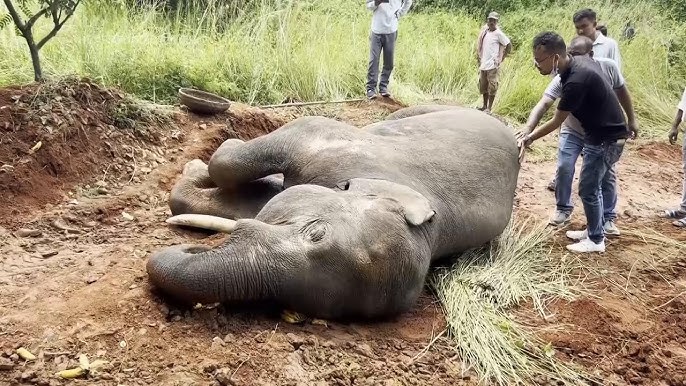
Following the death of the pregnant elephant, the Divisional Railway Manager (DRM) of Alipurduar Division announced the successful installation of an Anti-Collision Device (ACD) covering an area of 33 square kilometres. Since its installation, elephant casualties on this stretch reportedly declined significantly, according to the DRM.
However, railway accidents are not the only threat. On 17 November 2021, a dead elephant was found in Totapara beat under the Moraghat Range, suspected to have died due to electrocution. Barely a month later, another elephant carcass was recovered near Garkuta in the same range. Additionally, on 16 October and 21 August 2021, two more elephant carcasses were found in different parts of the Dooars, though no specific causes of death could be established.
On 28 November , 2023 the claim of installation of Intrusion Detection System in some parts of Dooars Railway, three elephants was hit by a goods train in Kalchini Rajabhatkhawa section and died after a gap of one hour. The Railways blamed the forest dept. for conveying any message about the herds roaming in Kalchini railway track although a whats app group between the two wings exist.
Earlier, on 11 December 2019, two elephants were killed after being hit by a Katihar-bound fast passenger train near Kharibari railway station under the Bagdogra Range. Notably, nearly five hours earlier, the drivers of another train managed to save two elephants through timely intervention—underscoring how alertness and preventive measures can make a critical difference in known elephant movement zones. In this corridor of the elephants and there were prior inputs passed to Railway of elephant herds of 30-35 tromping the paddy fields nearer to Mechi river in Indo Bangla border but the accident could not be averted taking animal lives.
Even prior to 2019, this railway stretch had already become dangerous for elephants. On 10 May 2017, a Katihar-bound Intercity Express struck a fully grown tusker on the tracks near Kiranchandra Tea Garden in Bagdogra, turning this section into a killer zone similar to the Dooars region. Despite this, no effective coordination meetings were held between the Railways and the Forest Department.
The Forest Department has disclosed that elephants from the Kurseong Division migrate to the Terai region every year, moving towards Keshtapur in Bagdogra, while another herd travels up to the Mechi River to feed on paddy fields on the Nepal side. However, due to fencing erected by the Nepal government, the elephants are now being diverted from their traditional routes. As a result, they are moving towards Asian Highway 2 and National Highway 31C, which run parallel to the railway track from Naxalbari to Kishanganj.
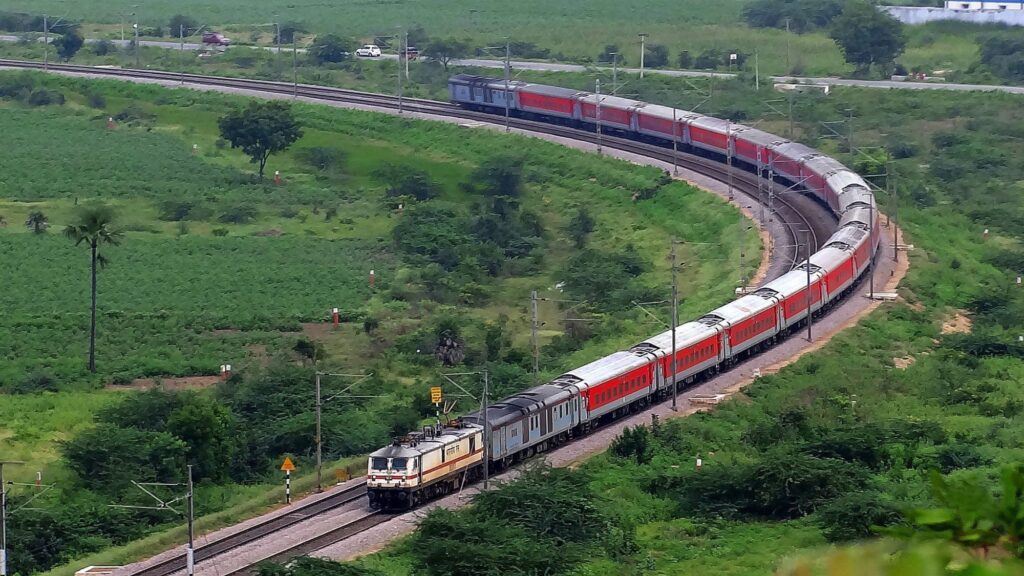
Photo of Rajdhani Express , representational purpose only.
In North Bengal, several high-speed trains—including the Rajdhani Express, Mahananda Express, Kaviguru Express, Rajya Rani Express, and Kanchankanya Express, and a host of goods train —pass through some of India’s most sensitive elephant corridors. These routes passing through stations like Sevoke, Odlabari, Malbazar, Nagrakata, caron , Kalchini, Jaldhaka, Hamiltongunj and Rajabhat khawa , intersect traditional migratory paths that elephants have used for generations. Collisions here are not rare accidents; they are recurring tragedies with no respite , from this grim scenario , possibly. Now elephants intrude into villages and localities after they see the traditional corridors truncated by no other than human society.
When a speeding diesel or electric locomotive collides with a full-grown elephant, the impact is ear defeaning, heart rending and catastrophic—often described by locals as sounding like a hillside collapsing. The cries of injured elephants can be heard from a far. For both elephants and the human communities living near the tracks, such horrific scenes have become disturbingly routine.
However, it is important to be precise and fair. Railways have become lethally dangerous for elephants in specific corridors, particularly in parts of North Bengal and the Northeast—but this is not intentional, nor is it uniform across India. In many regions, railways operate without major wildlife conflict.
In May this year, the carcasses of three elephants were recovered from the Palengchi beat under the Panbari Forest Range, near the India–Bhutan border in Manas National Park, Assam. It is strongly suspected that smugglers killed the elephants for their tusks. This incident reflects the alarming failure of the Bodoland Territorial Administration to ensure constant vigilance and effective protection of elephants and rhinos through its forest workforce. Several NGOs and retired forest officials have expressed serious apprehension that, unless immediate corrective measures are taken, a fresh spate of rhino killings may occur. Again, in July, reports emerged of herds of 20–25 elephants moving through the Barbari forests along the Kharagpur–Jhargram section and across the busy Kharagpur–Tatanagar railway track under South Eastern Railway, where several superfast trains pass round the clock.
This section is a known elephant corridor. Approximately three years ago, three elephants were killed by a speeding train on the same track, providing a clear precedent and sufficient warning for both the Forest Department and the Railways to adopt precautionary measures. But the lapses were galling.
This known risk , notwithstanding, both the departments failed to act responsibly this year. There was no effective coordination between the Forest Department and the Railways, apart from a casual WhatsApp message indicating herd movement. No speed restrictions, patrolling, or alert mechanisms were enforced.
Reportedly , the Shatabdi Express, which was running nearly six hours late, attempted to make up lost time by accelerating to around 100 km/h, completely ignoring the sensitivity of the elephant corridor crisscrossing the railway line. This reckless operation by the crews and Railway control room resulted in the horrific death of a mother elephant and two calves while they were attempting to cross the track in this section. Moreover there were no caution order handed over to the crews of the Shatabdi Express in the earlier station.
This incident highlights gross negligence and a systemic failure of coordination between authorities entrusted with wildlife conservation and public transport safety.
Elephant death and the resultant trauma
The loss of animal lives is undoubtedly a national loss ; however, the immediate psychological trauma and deep scar experienced by the people living in nearby areas cannot be ignored. In 2018, during the peak period of elephant deaths, a sit-and-draw competition was organized in four schools located especially along traditional elephant corridors. The theme of the competition was “Elephant in Your Eyes”, which was eye opener for many particularly for the railways.
While judging the entries, the judges were deeply anxious and saddened by several drawings. Works by students such as Somnath Lala and Dibya Sarkar (Class XI, Lataguri Boys’ High School, located near Gorumara National Park) depicted grievously injured and bleeding elephants lying beside railway tracks. Another striking drawing by Debraj Roy, a nine-year-old student of Gazoldoba No. 10 Primary School, situated about 25 kilometers from Lataguri, reflected a remarkable depth of thought and emotional attachment for his age. His picture portrayed groups of villagers armed with sticks, knives, and daggers attempting to drive away elephants to protect their paddy fields—a recurring conflict in the Dooars and Terai regions. Yet another drawing showed electric wire fencing intended to deflect elephant herds from entering agricultural land.
Much like the reaction of the art teacher in the film Taare Zameen Par, judge Lalita Lajmi was astonished by the maturity and realism reflected in these schoolchildren’s drawings from the Dooars region.
Later, Dibya explained that she had drawn the image of a bleeding, injured elephant because she had personally seen dead elephants lying beside the railway tracks near the Malbazar section. Debraj, the student from Gazoldoba, shared that he and his parents often stay awake at night to monitor elephant movements in order to protect their paddy fields, and his drawing was a direct reflection of those lived experiences. Following the gruesome and heart-wrenching death of a pregnant elephant in the Nagrakata–Chalsa section as referred in the article , the Railways have expressed deep concern and distress over such incidents. To prevent the recurrence of similar tragedies, the Alipurduar Division and the forest dept had jointly organised an awareness programme and workshop for loco running staff, including drivers and assistant drivers in 2019 . The programme was held at the Zonal Training School located in the DRM building campus.
The workshop aimed to sensitise and rejuvenate the running staff about the importance of protecting wildlife, especially animals attempting to cross railway tracks in forested areas. Such workshops will now be organised regularly as part of the division’s preventive measures. Divisional Safety Officer Mr. Biswajit Jha stated that the coverage area of the Elephant Detection System acting as Anti-Collision Device (ACD) would be extended soon to further enhance safety and reduce the risk of animal casualties. Last year, drivers and assistant drivers of mail and express trains were treated by psychologists and psychotherapists after showing clear signs of depression following traumatic encounters with elephants on railway tracks. The psychological trauma experienced by crew members became so severe that many withdrew from conversations with their family members and colleagues. They found it extremely difficult to cope with the emotional impact of these fatal accidents involving elephants.
But there are cases , although insignificant in numbers when the drivers of speedy trains slam the emergency breaks to prevent imminent clashes. On 25 August , 2021, the crews Sealdaha bound Kanchenkanya Express spotted an elephant nearer to pillar no. 72/1 in between Nagraka and Chalsa criss crossing Chapramari sanctuary another important hot spot of biodiversity. The elephant was dangerously moving to speeding railway engine. In another occasion, in the same track in Sevoke Gulma section, the sheer presence of mind of the drivers saved another elephant around 5 pm.
But an extremely unusual thing happenedon 6 March of this year when the railway officials of DRM along with the forest dept. was installing Elephant Detection System in Rajabhatkhaway railway track near DRM office, when a standby Kunki suddenly turned very furious and broke the chain to hit and smash the officials standing for trial run; Kanchenkanya Express was passing then and the train run aimed response of the driver and the Kunki from Buxa Tiger Reserve was made to stand nearby track. The employee Sandip Chowdhuri was trampled the death then.
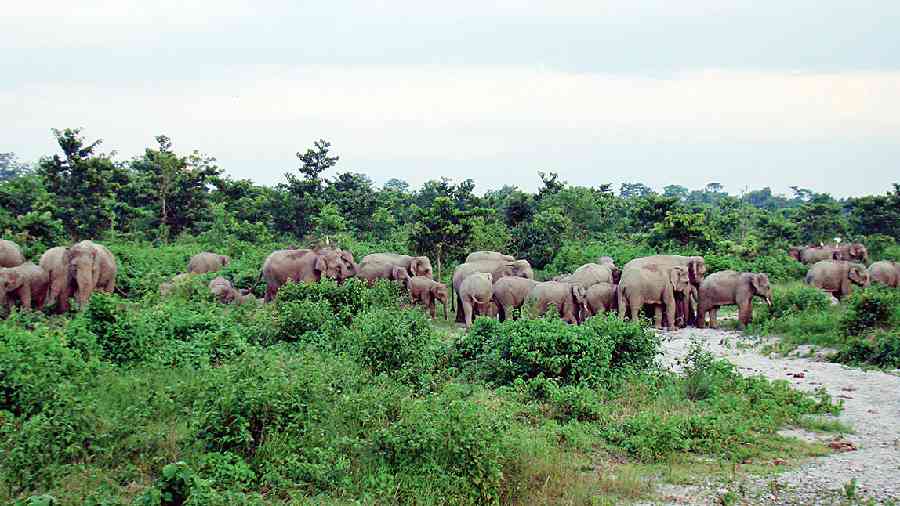
Kurseong Forest Division
In 2019, the Kurseong Forest Division, in collaboration with a local NGO working for elephant conservation, installed nearly 50 sensors in Gorumara National Park on an experimental basis. The DFO and Wildlife Warden of Darjeeling, Mr. Jiju Jespar, stated that these sensors were functioning effectively as an alternative to electric fencing. He further informed that more sensors would be installed across major elephant corridors in the future.
Just ten days before the tragic killing of eight elephants in Kampur, Prime Minister Narendra Modi had promised all-out protection for forests and wildlife under Indian forestry initiatives. Similarly, Union Environment Minister Bhupendra Yadav assured the Rajya Sabha that modern methods would be devised to safeguard animal lives.
The Ministry has surveyed 127 railway stations covering 345 kilometres of railway tracks. As a result, 77 locations across 14 states were identified as sensitive zones. Additionally, 503 elephant-prone zones were fenced, and 65 underpasses were constructed to reduce human–elephant conflict and prevent accidents. In the aftermath of the killing of eight elephants in Kampur station , it appears that despite repeated assurances and long-standing promises, elephants remain as vulnerable as ever. The Jalpaiguri Forest Department has initiated several measures, including the erection of fencing, construction of underpasses, clearing of bushes along railway tracks, and installation of tall electric pillars with powerful searchlights focused on the tracks to improve visibility. However, these measures have failed to deter elephants from entering railway lines.
Environmentalists attribute this persistent intrusion primarily to acute fodder shortages, which have pushed elephants to the brink of desperation. Hungry elephants are now frequently targeting primary schools, Anganwadi centres, and the kitchens of rural households in search of food.
At Bamundanga Tea Estate near Kalchini, school authorities were compelled to construct an underground storage facility for rice and wheat to prevent elephant raids. In another incident at Shalkumarhat under Falakata Block in Alipurduar district, an elephant reportedly consumed a mosquito net—an incident that starkly illustrates the extreme hunger afflicting these animals. So augmenting food resources inside the forestry and prevention of encroachments are the primary need of today.
The challenge is not to vilify the railways, but to insist on infrastructure that respects elephant corridors as living landscapes, not obstacles to be crossed at full speed. Until that happens, each collision will raise the same troubling question:
Are these tragedies unavoidable—or preventable? The Railways shall have a kneejerk reaction after seeing the headlines whether it reduces to be a killer railway zone ; one should see the recent report of MOEF which dubs the railway zones particularly NF railways as killer zone. In its report , it has squarely blamed the NF railway for its utter failure for the protection of Elephants.
Santanu Basu,